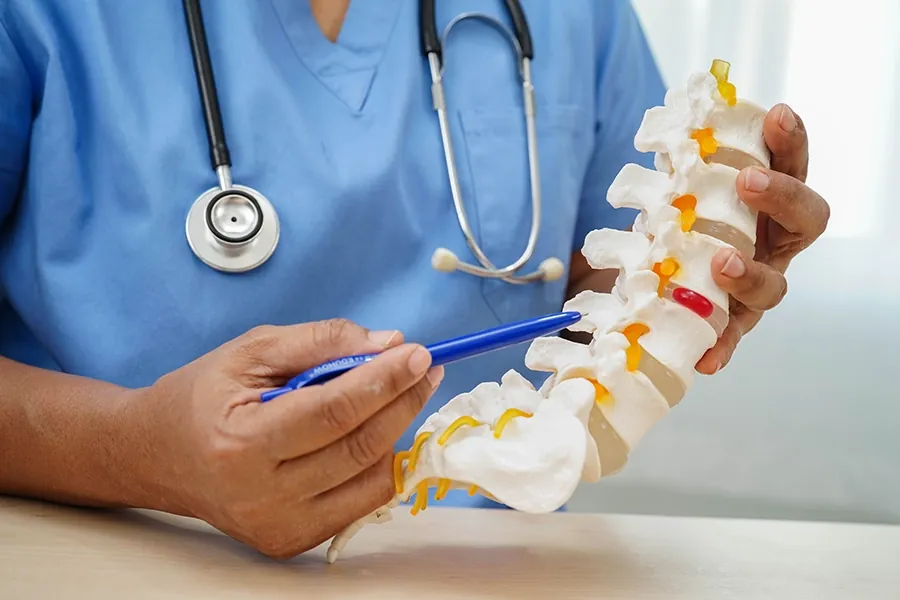
Sciatica: Causes, Symptoms and the Latest Treatments
Learn about the causes and symptoms of sciatica and its modern treatments, and when you should see a doctor to relieve the pain and regain movement and daily activity.

Many people suffer from pain that radiates from the lower back to the leg, and this is often associated with what is known as sciatica. This pain can affect movement and daily activity, and its severity varies from person to person depending on the cause of the problem and how much pressure is on the nerve.
What Is Sciatica?
Sciatica is a group of symptoms caused by irritation of or pressure on the sciatic nerve, the longest nerve in the body. This nerve starts at the bottom of the spine and runs through the buttocks to the legs. When it is compressed or inflamed, the patient feels pain along its path, together with other symptoms of varying degrees.
What Causes Sciatica?
Several causes can lead to sciatica, most notably:
- A herniated disc between the lumbar vertebrae.
- Spinal stenosis.
- Degeneration (osteoarthritis) of the lumbar vertebrae.
- Spinal injuries.
- Pressure on the nerve roots due to changes in the vertebrae with age.
Some factors can also increase the likelihood of developing it, such as sitting for long periods, lifting weights incorrectly and lack of physical activity.
What Are the Symptoms of Sciatica?
Symptoms vary depending on how much pressure there is on the nerve, but the most common include:
- Pain that starts in the lower back and radiates to the leg.
- Numbness or tingling in the leg or foot.
- Muscle weakness in some cases.
- Increased pain when sitting for long periods.
- Difficulty walking or standing for extended periods.
While some patients feel intermittent pain, others suffer from constant pain that affects their daily quality of life.
When Should You See a Doctor?
You should consult a doctor if the pain lasts a long time, if clear weakness appears in the leg, or if the symptoms suddenly get worse. Early diagnosis also helps in choosing the right treatment and preventing the problem from progressing.
How Is Sciatica Diagnosed?
The doctor relies on the medical history and clinical examination to assess the symptoms. They may also request tests such as X-rays or MRI to identify precisely what is putting pressure on the nerve and set an appropriate treatment plan.
What Are the Treatments for Sciatica?
Treatment depends on the main cause of the condition and the severity of the symptoms. For example, some patients may benefit from medication, physiotherapy and lifestyle changes. On the other hand, more complex cases may need advanced procedures or surgery when necessary.
Ultimately, a correct diagnosis and early treatment help relieve pain, improve movement and allow a faster return to daily activities.
Sciatica Treatment at Almahmoud Medical Group
Almahmoud Medical Group provides accurate assessment of sciatica and spine pain using the latest diagnostic methods and specialised treatment plans. Dr. Ghassan Algeadi, Consultant Orthopaedic and Spine Surgeon, oversees the assessment of cases and sets the right treatment options for each patient, with the aim of relieving pain, restoring movement and improving quality of life.
———————— Read also: Orthopaedic and Spine Surgery in Qatar Dr. Ghassan Algeadi Joins Almahmoud Medical Group in Qatar