The Causes of a Herniated Disc and the Best Treatment Methods
Many people suffer from recurring back pain and often believe it is simply the result of fatigue or sitting for long periods. But in some cases the cause may be a herniated disc, one of the most common problems affecting the back and neck, causing pain that may radiate to the leg or arm. What is a herniated disc? Between the vertebrae […]

Many people suffer from recurring back pain and often believe it is simply the result of fatigue or sitting for long periods. But in some cases the cause may be a herniated disc, one of the most common problems affecting the back and neck, causing pain that may radiate to the leg or arm.
What Is a Herniated Disc?
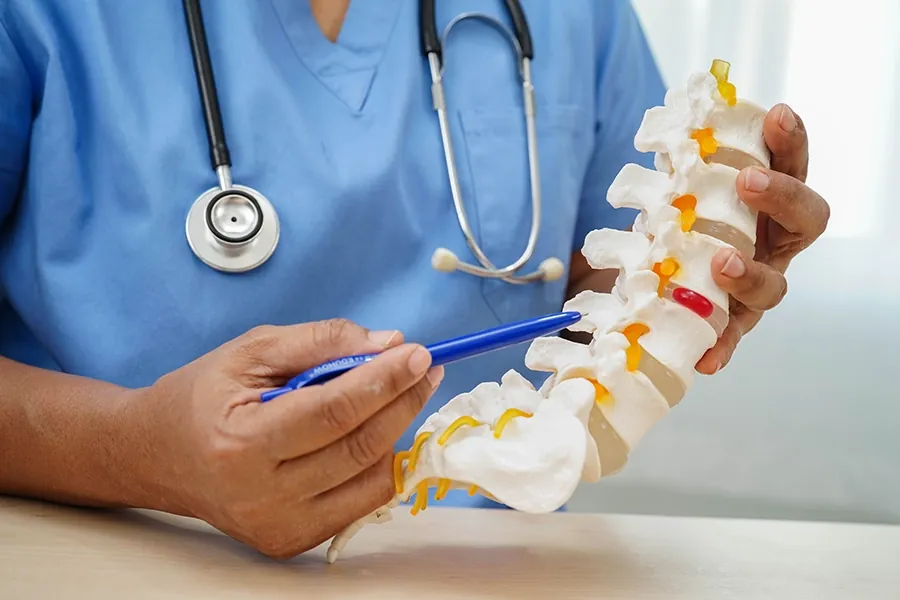
Between the vertebrae of the spine are flexible discs that help absorb shocks and ease movement. When part of one of these discs moves out of its normal position or presses on the surrounding nerves, a condition known as a herniated (slipped) disc occurs.
The problem may appear in the lower back or in the neck, and symptoms differ from person to person depending on the location and severity of the injury.
What Symptoms Does the Patient Feel?
In many cases, it is not only back pain; it may be accompanied by:
- Pain radiating to the leg or buttocks.
- Numbness or tingling in the limbs.
- Weakness in some muscles.
- Difficulty sitting or standing for long periods.
- Increased pain when moving, coughing or sneezing.
Some patients also notice that the pain starts mildly and then gradually increases over time.
What Are the Common Causes of a Herniated Disc?
A herniated disc can be caused by several factors, including:
- Sitting for long periods in an incorrect posture.
- Repeatedly lifting heavy weights.
- Ageing.
- Excess weight.
- Lack of physical activity and weak back muscles.
- Injuries and accidents.
That is why the condition is not limited to older people; it can also affect young people, especially with desk jobs and a sedentary lifestyle.
When should you see a doctor?
You should not ignore the pain if it lasts for several weeks or starts to affect your sleep, movement and work. You should also consult a doctor if you feel constant numbness or weakness in the leg or arm.
Early diagnosis helps in choosing the right treatment and prevents the problem from getting worse in the future.
Does a Herniated Disc Always Need Surgery?
No. In fact, a large proportion of cases can be treated without surgery, depending on the doctor's assessment. Treatment depends on the cause and severity of the problem and how much it affects the patient's daily life.
That is why an accurate diagnosis is the most important step before making any treatment decision.
Herniated Disc Treatment at Almahmoud Medical Group
Almahmoud Medical Group in Qatar offers specialised services for diagnosing and treating herniated discs and back and neck pain under the supervision of Dr. Ghassan Algeadi, Consultant Orthopaedic and Spine Surgeon. Treatment is based on an individual assessment of each patient's condition and choosing the most suitable solution to relieve pain, restore movement and improve quality of life.
————- Sciatica: Causes, Symptoms and the Latest Treatments Neck and Back Pain: When Is It More Than Everyday Fatigue? Knee Pain: When Is It Normal and When Should You See a Doctor?