
Penile Implants: When and Why?
Penile implants are a permanent surgical solution for chronic erectile dysfunction. They provide natural rigidity for sexual intercourse and improve confidence and quality of life, with effective results when other treatments have failed.
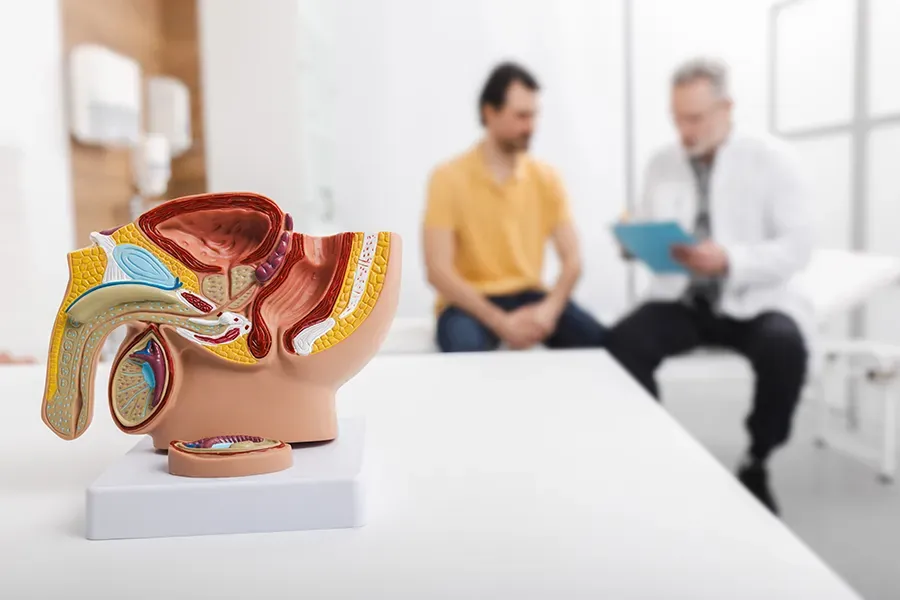
Penile implants are among the advanced medical solutions for treating chronic erectile dysfunction, especially when other treatments such as medication, injections or vacuum devices have failed. The operation aims to restore sufficient rigidity to the penis, allowing the patient to have sexual intercourse normally and restoring his self-confidence and quality of life. Although the decision to have an implant is considered permanent, for many men it is the ideal solution after years of struggling with ineffective treatments.
Reasons for Choosing Penile Implants
Doctors turn to penile implant surgery in several cases, most notably:
- Chronic erectile dysfunction: when the patient does not respond to medications such as sildenafil or tadalafil.
- Peyronie's disease: especially where there is severe curvature that prevents normal intercourse.
- Prolonged ischaemic priapism: which leads to damage of the muscle tissue inside the penis.
- Loss of length or rigidity during erection: where the implant helps make up for the deficit and achieve sufficient rigidity.
Types of Penile Implants
There are three main types of penile implants, and the appropriate type is chosen according to the patient's health and needs:
- The rigid (malleable) implant: consists of two flexible rods implanted inside the corpora cavernosa. It provides permanent rigidity and is easy to use, but it keeps the penis in a permanent semi-erect state. It is suitable for patients with mobility problems or those who prefer simplicity.
- The three-piece inflatable implant: considered the most common. It consists of two cylinders inside the penis, a pump in the scrotum and a fluid reservoir in the abdomen. It allows full control between erection and flaccidity and gives a very natural appearance. However, the surgery is more complex and the cost relatively higher.
- The two-piece inflatable implant: consists of two cylinders and a pump in the scrotum, but has no additional reservoir. It is a good option where there has been previous abdominal or pelvic surgery, although its ability to return the penis to full flaccidity is lower compared with the three-piece type.
Benefits of Penile Implants
- Restoring the ability to have sexual intercourse at any time and for the desired duration.
- Improving self-confidence and overall quality of life.
- A permanent solution for erectile dysfunction that has not responded to treatment.
- Providing rigidity close to a natural erection, helping to satisfy both partners.
- Ease of use after training, especially with inflatable implants.
Possible Risks and Complications
Like any surgical operation, penile implant surgery may be associated with some complications, although they are relatively rare:
- Infection at the implant site, especially with repeat surgery.
- Temporary bruising and swelling of the penis after surgery.
- The possibility of mechanical failure in inflatable implants after 10–15 years, which may require replacement.
- In some rare cases, erosion or drooping of the head of the penis may occur.
After the Operation
The patient usually leaves hospital the same day or the next day. Doctors advise rest for about two weeks, with painkillers and antibiotics. Sexual intercourse must be avoided for at least four weeks after the operation to allow complete recovery. A follow-up appointment is also scheduled after the operation to teach the patient how to use the implant, whether it is inflatable or malleable.
Penile implants are an effective and permanent surgical solution for severe erectile dysfunction. Although they do not increase the length or girth of the penis, they provide sufficient rigidity for satisfying sexual intercourse. The decision to have an implant should be made after a thorough discussion with a urologist and a full understanding of the benefits and risks.
For consultation and accurate diagnosis regarding penile implants, you can book an appointment with Dr. Ibrahim Ammar Taha, specialist in kidney and urological surgery and andrology, at Almahmoud Medical Group – Qatar.