Rhinoplasty: Reasons and Types
Rhinoplasty is one of the most common cosmetic operations, combining aesthetic and health goals to improve the appearance of the nose and correct defects, which is reflected in the patient's self-confidence and quality of life.
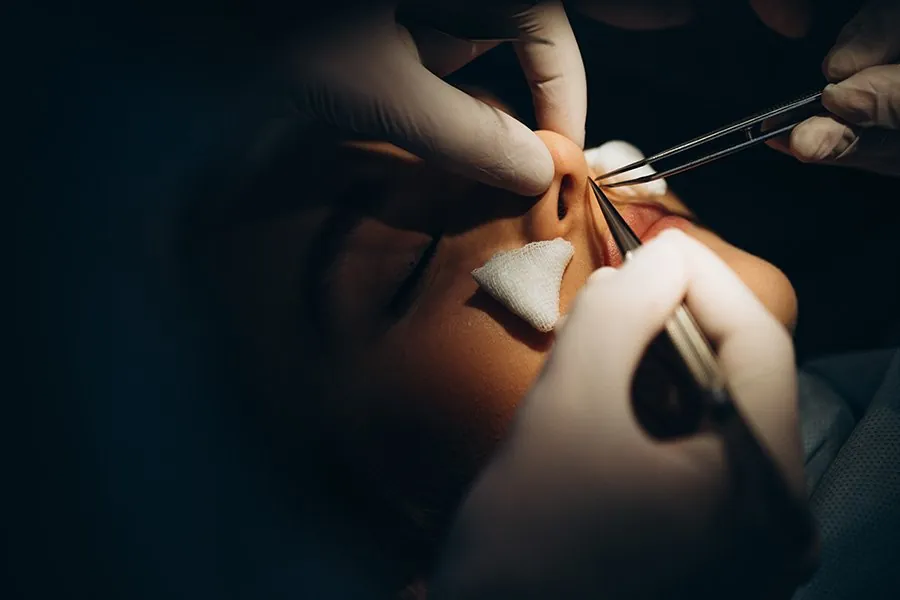
Rhinoplasty is one of the most common cosmetic operations. It combines aesthetic and health goals, aiming to improve the appearance of the nose and correct defects. This improvement has a positive effect on the patient's self-confidence and quality of life.
The reasons for having rhinoplasty fall into aesthetic reasons and health reasons:
Aesthetic reasons:
- Reducing the nose if it is very large.
- Enlarging the nose if it is very small.
- Changing the angle of the nose in relation to the upper lip.
- Correcting the shape of the tip of the nose.
- Correcting bumps or other defects in the nose by reshaping the skin covering the nose, the underlying cartilage or the nasal bones.
Health reasons:
- Congenital defects that affect normal breathing or the voice.
- A broken nose that affects breathing or causes a health problem in the nose.
- Enlargement of the sebaceous skin glands, which causes abnormal enlargement of the nose.
Types of rhinoplasty:
The types of rhinoplasty vary according to the cause of the problem and the purpose of treatment, as follows:
Nasal reconstruction:
Doctors resort to this operation in cases of disease or cancer in which the patient loses their nose. The patient may also need it when there is a deformity of the bones or cartilage. In this case, doctors add bone or cartilage to bring out the external shape of the nose.
In this procedure, the bone and cartilage are taken from the same person. They may be taken from the pelvic bones, the ribs or the outer ear. The skin used to cover the bone is taken from nearby tissue or from distant areas such as the limbs or abdomen.
Synthetic materials such as silicone can be used instead of bone or cartilage, or an artificial nose can be fitted if surgery is impossible for various reasons.
Nose reduction:
In most cases, doctors perform rhinoplasty to reduce the nose or improve its appearance. Patients seek this procedure when the nose is large and affects their overall appearance. This effect is also reflected in their psychological state.
In this procedure, the bones and cartilage of the nose are partially lifted through an incision that is not visible, inside the nostrils. It is performed under either general or local anaesthesia, depending on the severity of the case and the extent of the deformity.
Septoplasty:
This is an operation to treat a deformity of the nasal septum, which affects breathing and causes headaches. In this procedure, the nasal septum is corrected so that it sits in a better position for breathing, without an obstruction that blocks the nose.
Secondary rhinoplasty:
This is performed if the desired results were not achieved in a previous operation.
Rhinoplasty procedures range from simple to complex. Some patients may need a minor revision of a previous operation, while others undergo major operations that make the procedure more complex and riskier.
Thread rhinoplasty:
Thread rhinoplasty uses two types of thread, polydioxanone and polycaprolactone. These are very fine threads used to stitch the tissues inside the nose to rejuvenate the nose without risk and to reduce its size.
Thread rhinoplasty stands out because its results are immediate and quick, taking 30–45 minutes; it is non-surgical and painless, and it is effective for 6–12 months when polydioxanone threads are used, and 18–24 months when caprolactone threads are used.
Reducing the nose with threads may lead to some side effects such as swelling or pain, skin puckering, bleeding or infection, and in rare cases it can cause nerve damage.
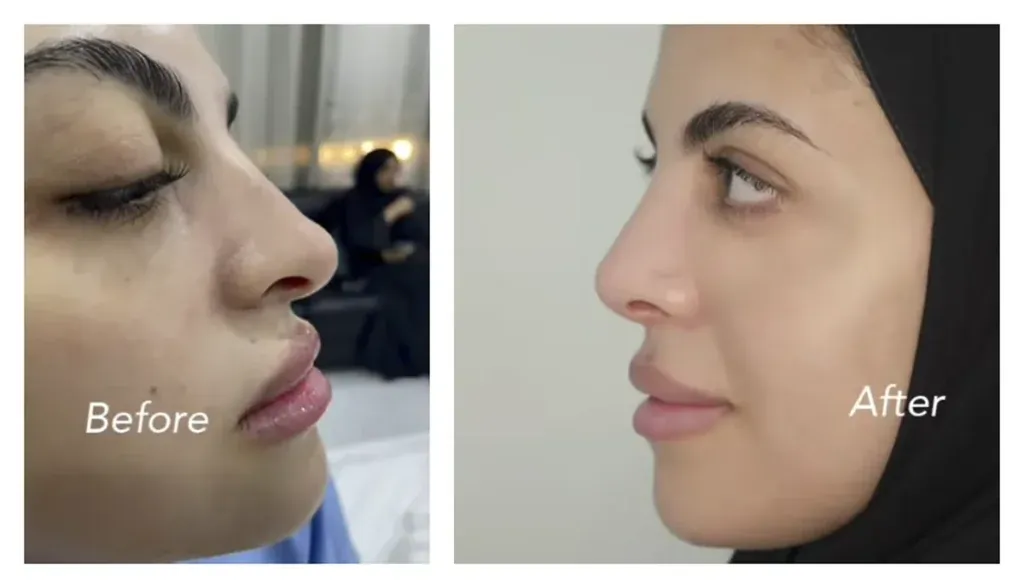
Deviated nose surgery:
The nose contains a nasal septum covered with skin and blood vessels. This septum divides the right and left sides down the middle so that the two sides are equal.
However, the septum sometimes divides the two sides so that one is slightly larger than the other; this is called a deviated septum or deviated nose.
People with a deviated nasal septum sometimes experience a change in the pattern of airflow that can block the narrower side, leading to long-lasting sinusitis, or dryness and cracking of the skin of the nasal septum, leading to recurrent nosebleeds.
A deviated nose results either from a strong blow to the nose, deformities caused by certain types of infection, or cancers, or the person may be born with a deviated septum.
Doctors perform deviated nose surgery for several reasons. The most important is to treat nasal obstruction caused by the deviated septum, where the septum presses on the bony structures inside the nose. This procedure also helps treat chronic sinusitis, remove nasal polyps and stop recurrent nosebleeds.
In addition to classifying rhinoplasty by its reasons, the types of rhinoplasty can be divided by surgical technique into two types:
Closed rhinoplasty:
In this operation, the surgeon makes incisions inside the nose, which means a shorter healing time after surgery, less swelling and no visible scars.
Open rhinoplasty:
Here the surgeon makes external incisions, particularly between the nostrils, in addition to the internal incisions.
One advantage of this operation is that it gives the surgeon more room to manipulate and change the structure of the nose, and it gives greater results.
In summary:
Rhinoplasty is not just a cosmetic procedure; it can also be a health solution that helps improve breathing and correct defects. With its many techniques, the specialist doctor determines the most suitable one to achieve the ideal result for each case.
At the plastic surgery clinic of Almahmoud Medical Group, we offer you comprehensive care with the latest techniques at the hands of Almahmoud Medical Group's consultant plastic surgeon: Dr. Kamal Saleh
For a consultation or to book an appointment, contact us now.